Ebola Cases in Kenya and Nigeria Raise Questions Over Uganda's Virus-Free Claim
Health officials say the first confirmed Ebola patients in Kenya and Nigeria both passed through Entebbe airport on October 3, while Switzerland disputes Uganda's account of the Nigerian patient's travels.
By News Media House Staff ·
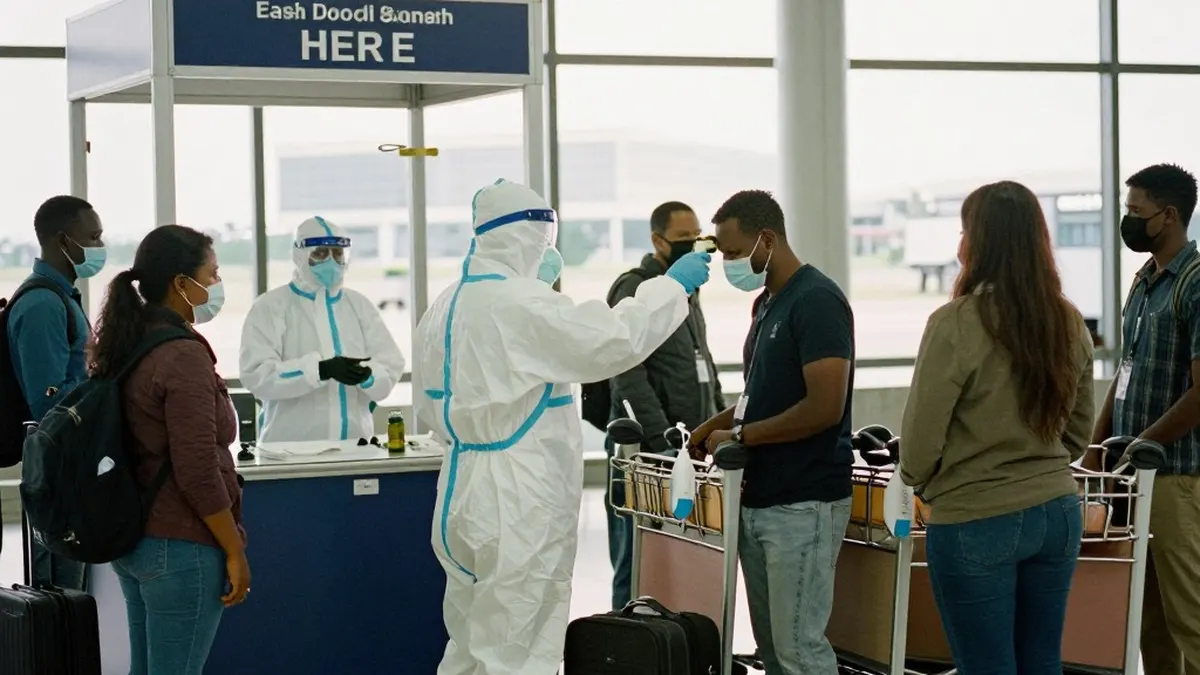
Two Ebola cases in countries thousands of kilometers apart have drawn fresh attention to Uganda, which says it has no confirmed active infections. African health officials say the first confirmed patients in Kenya and Nigeria both traveled through Uganda's Entebbe International Airport on October 3, and a new statement from Switzerland has challenged Uganda's version of one patient's movements.
Wessam Mankoula, head of emergency preparedness and response at the Africa Centers for Disease Control and Prevention (Africa CDC), said the two patients may have crossed paths at the airport. Investigators are checking whether they were there at the same time. It has not been established that they met or that any transmission took place.
In Nigeria, Health Minister Muhammad Ali Pate confirmed one imported case in the capital, Abuja, involving a woman who had recently traveled in East Africa, including Uganda. She developed symptoms on October 7 and visited a private health facility on October 11. Laboratory tests confirmed Ebola, and she was isolated for treatment. Pate said she was stable and that 44 contacts had been identified, among them health care workers, caregivers, patients and people she may have met while traveling.
Uganda's Health Ministry said in an October 20 statement that preliminary findings showed the woman traveled to eastern Democratic Republic of Congo (DRC) for business, then passed through Uganda without symptoms before returning to Nigeria. The ministry added that travel through Uganda does not establish that infection happened there.
Switzerland's Federal Department of Foreign Affairs has disputed that account. In a statement to Reuters, it said the woman and her husband did not travel to the DRC. Swiss authorities identified her as a Swiss national of Ugandan origin married to a Swiss diplomat based in Abuja. The Swiss government earlier told Reuters she was believed to have been infected while traveling with her husband in Uganda, though that has not been independently confirmed. The World Health Organization and Africa CDC said they had received no confirmed information that she visited the DRC.
Kenya's investigation also leads through Uganda. The country's first confirmed Ebola patient died in Nairobi on October 5 after traveling from the DRC through Uganda. Kenyan authorities have reported further infections linked to that case. Officials are also searching for a Ugandan national who was a contact of the dead patient. Patrick Amoth, Kenya's director-general for health, told the Daily Nation: "We know him (the Ugandan) by name and passport number and from his phone but we are not able to reach him." The paper reported that the man was using a South Sudanese phone number. Being untraced does not mean he is infected, but finding exposed people is essential to stopping spread.
Ebola symptoms typically appear two to 21 days after infection, and the WHO says infected people are not considered infectious until symptoms begin. Uganda shares a long border with the DRC, and trade, population movements and international travel make it hard to pin down where exposure occurred. Even well-run border surveillance cannot catch every infected traveler. Uganda says it is strengthening screening at entry points, and Nigeria has stepped up contact tracing and infection prevention.
In Abuja, the case has revived memories of earlier outbreaks. Resident Peace Kolawole said she was very concerned, while another resident, Jonathan Steven, said people are "worried about surviving" amid economic hardship.
Key questions remain open: whether the two patients came into contact at Entebbe, and where the Nigerian woman was infected if she never went to the DRC. Uganda's zero-case declaration does not prove all infections have been ruled out, and the travel histories do not prove an undetected outbreak. The Africa CDC will hold an "extraordinary virtual meeting" of national health officials on October 28 as the continent's latest Ebola outbreak continues to spread.
Source: Deutsche Welle